CDSCO Tightens Surveillance on Spurious Drugs in India After WHO Warning
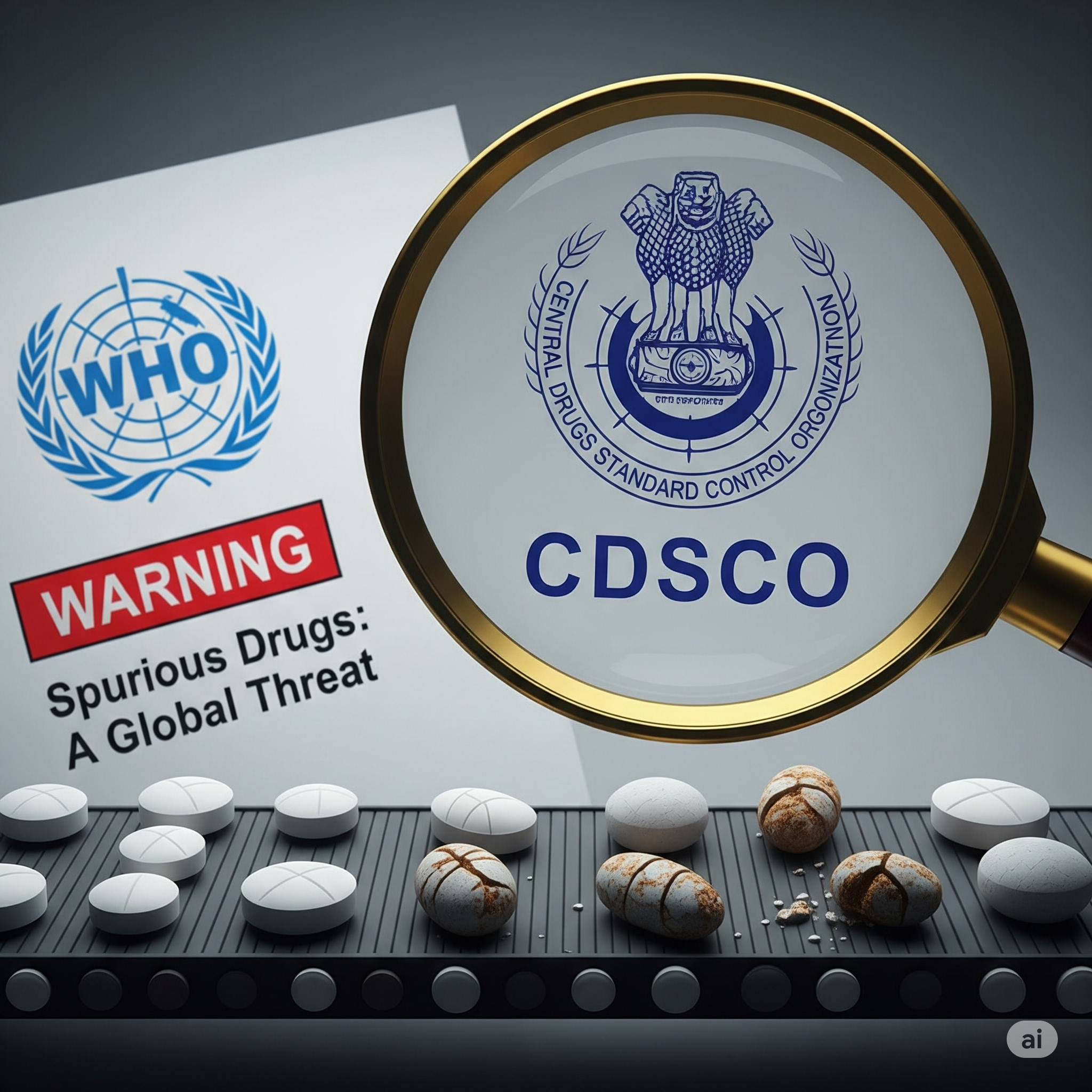
CDSCO Tightens Surveillance on Spurious Drugs in India After WHO Warning
Summary
India’s top drug regulator, CDSCO, is launching a nationwide crackdown on spurious and substandard medicines. This follows WHO’s sharp observations on India’s drug safety framework. Key actions include tighter advertising norms, public reporting portals, and stronger market surveillance.
🧪 Why This Matters Spurious Drugs in India
India’s pharmaceutical sector is globally renowned for producing high-quality, affordable generics and vaccines. But the presence of spurious and substandard drugs continues to threaten patient safety and dent the reputation of compliant companies. A recent World Health Organization (WHO) assessment flagged major gaps in India’s regulatory framework, prompting urgent reforms by the Central Drugs Standard Control Organisation (CDSCO).
🏛️ CDSCO’s National Action Plan: What’s Changing?
CDSCO is now preparing a National Action Plan to:
- Prevent, detect, and respond to spurious or “not of standard quality” (NSQ) medical products.
- Implement robust market surveillance mechanisms.
- Strengthen monitoring of medical product advertisements, especially those targeting healthcare professionals.
- Create state and central reporting portals for public to report fake or substandard drugs.
📰 Advertising Crackdown: No More Misleading Promotions
A core pillar of the new plan is tight regulation of drug advertisements, particularly those aimed at doctors and healthcare professionals.
“Closer oversight of medical product ads will ensure safer treatment decisions and more responsible marketing,” said a senior CDSCO official.
Key regulations to remember:
- Ads for drugs falling under Schedule H, H1, and X are strictly prohibited.
- Only registered medical practitioners can prescribe these restricted medications.
- Pharma companies must stop misleading advertisements across print, digital, and doctor channels.
📢 SF Reporting Pages on Government Portals
CDSCO plans to instruct all state and central drug authority websites to host:
- A dedicated “SF Reporting Page” (for Substandard and Falsified drugs).
- Step-by-step guidance for the public to report suspicious products.
- A structured mechanism to process and investigate such reports.
“This move empowers the public and boosts transparency in India’s pharmaceutical supply chain,” said the official.
🕵️♀️ WHO’s Recommendations at a Glance
The WHO called for India to:
- Enhance training and capacity of drug regulators.
- Implement stronger control over misleading marketing.
- Establish formal SF-reporting mechanisms.
- Introduce risk-based inspections of drug manufacturers.
These points were discussed during the Drugs Consultative Committee meeting chaired by the Drugs Controller General of India (DCGI), and a formal implementation strategy is underway.
🏭 Risk-Based Pharma Firm Assessments Underway
To proactively prevent quality lapses:
- The government is conducting risk-based inspections of pharmaceutical manufacturing units.
- Regulatory action has already been initiated in multiple states.
- Drugmakers will be held accountable for compliance with Good Manufacturing Practices (GMPs) and safety norms.
💬 Industry Viewpoint: A Wake-Up Call for Brand Protection
“Spurious versions of branded drugs not only risk patient lives but also damage the hard-earned reputation of legitimate pharma players,” said Nikkhil K. Masurkar, CEO, Entod Pharmaceuticals.
According to Masurkar:
- When fake versions of a company’s drugs surface, it often leads to public mistrust, despite the original manufacturer’s full compliance.
- The firm ends up spending heavily on legal action, internal audits, and damage control, diverting energy from R&D and patient care.
- Long-term brand perception suffers, even though the counterfeiters are at fault
🧾 Final Word
India’s pharma exports are projected to cross $100 billion by 2025, making drug quality a national priority.Spurious Drugs in India CDSCO’s decisive response to WHO’s concerns signals a positive shift toward tighter enforcement, greater transparency, and stronger public participation.
These reforms will not only protect patients but also preserve the global credibility of Indian pharmaceuticals.
🔐 Disclaimer
The content of this article is intended solely for informational and educational purposes. It is not a substitute for professional advice from a qualified healthcare provider, regulatory consultant, or legal advisor. Spurious Drugs in India While every effort has been made to ensure accuracy, the information herein is based on publicly available data, including regulatory developments, industry sources, and statements from credible officials as of the time of publication.
Readers are advised to:
- Verify the applicability of the regulatory updates with the Central Drugs Standard Control Organisation (CDSCO) and the Ministry of Health and Family Welfare before making any decisions.
- Contact appropriate state drug control authorities for reporting substandard or falsified (SF) medical products.
- Seek legal counsel or regulatory assistance for interpreting or complying with India’s drug laws and WHO recommendations.
The authors, publishers, and associated parties accept no responsibility for any direct or indirect consequences arising from reliance on the content of this publication. Any third-party trademarks, brand names, or quotes are used for reference purposes only and remain the property of their respective owners.
For the most updated official circulars or enforcement actions, please visit the CDSCO official website.
p-Xylene Quality Control Amendment 2025 BIS Certification Deadline Extended to December 2025