Unlimited Health Insurance in India: Game-Changer or Gimmick?
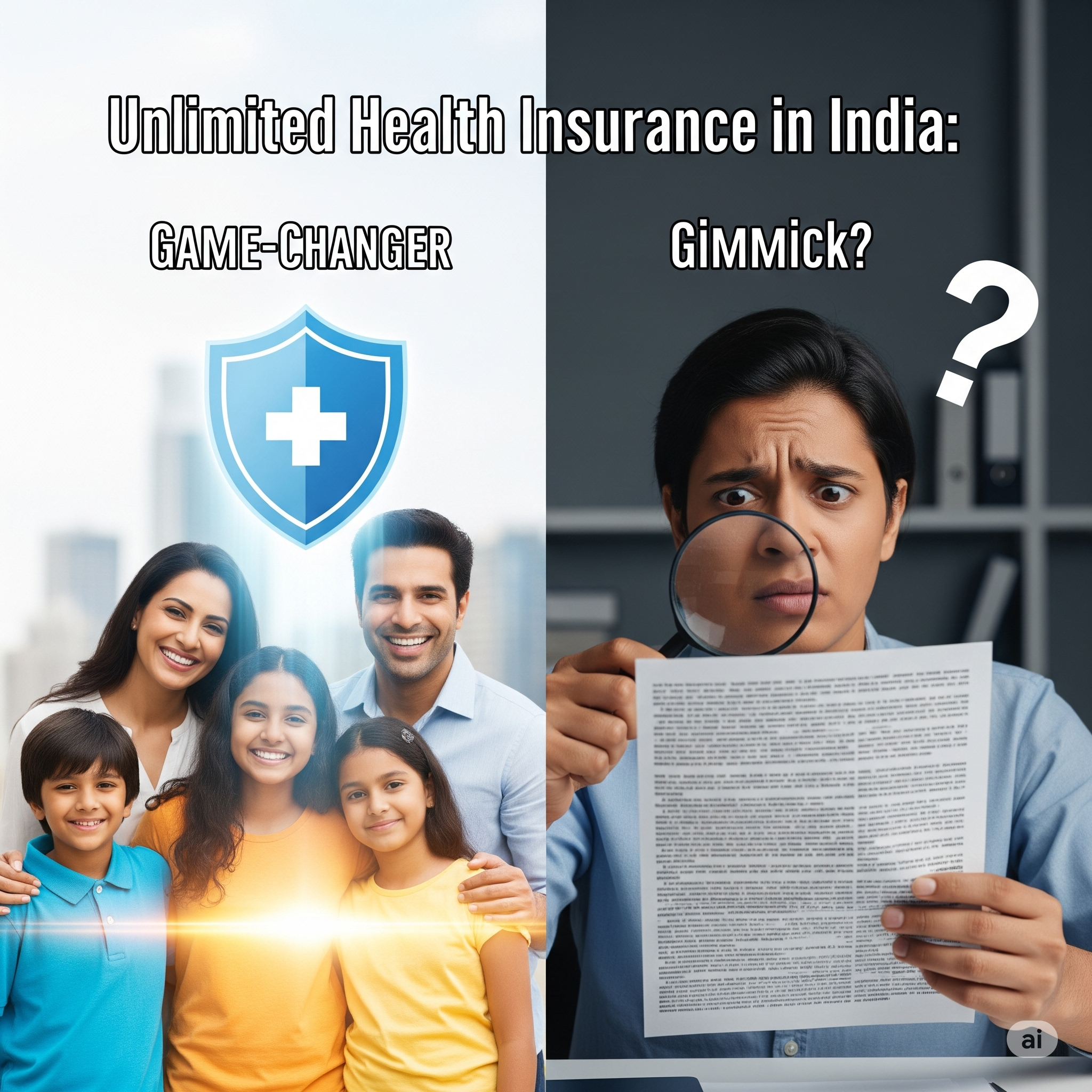
Unlimited Health Insurance in India: Game-Changer or Gimmick?
Unlimited health insurance in India is no longer a distant dream. In a move that signals a bold shift in medical insurance design, select insurers have introduced plans with no upper limit on the sum insured (SI). But the question remains—can such products truly deliver on their promise when it matters most?
The Real Story Behind Unlimited Cover
When Delhi-based Anubhav Mahajan’s young son was diagnosed with cancer, his ₹30 lakh insurance (₹15 lakh base plus top-up) was inadequate. The total treatment cost surpassed ₹2 crore. It was a harsh wake-up call—the gap between conventional policy limits and real-world healthcare costs can be staggering.
So when Mahajan heard about Acko General Insurance’s unlimited SI plan, he was intrigued. He eventually purchased the policy for ₹57,400—covering himself and his 70-year-old mother under a plan that promised no cap on hospitalisation claims.
But as any seasoned insurance advisor would say—“unlimited” is a strong word in insurance.
What Does ‘Unlimited’ Really Mean?
Unlimited sum insured implies no maximum financial ceiling on treatment claims. Unlike standard policies that cap coverage at ₹10 lakh, ₹20 lakh or even ₹1 crore, these products promise limitless financial support for hospitalisation, surgeries, and major treatments.
Currently, only two insurers in India offer this product tier:
- Acko Platinum Plan
- ICICI Lombard Elevate Plan
These plans typically come without sub-limits, such as room rent caps, restrictions on modern treatments, or exclusions for expensive organ transplants. Even pre-existing condition waiting periods can be relaxed—although this depends on underwriting.
Yet, data transparency remains an issue. The Insurance Regulatory and Development Authority of India (IRDAI) does not disclose product-level adoption, and insurers are tight-lipped about policy uptake.
Are These Plans Trustworthy?
While the value proposition seems appealing, not all advisors are convinced.
“Unlimited sounds great, but many new-age insurers don’t have a robust claims track record,” says Nikhil Jha, Co-Founder, Hercules Insurance Advisory.
Acko operates via a direct-to-consumer model, meaning buyers must manage claims without an agent’s support. For high-value claims, this could be a risk.
In contrast, ICICI Lombard Elevate—though more expensive—follows a traditional distribution network with a deeper claims service history.
Restoration vs Unlimited: Don’t Be Confused
Policyholders often mistake unlimited restoration benefits for unlimited sum insured. The difference is crucial:
| Feature | Unlimited SI | Unlimited Restoration |
|---|---|---|
| Definition | No financial cap on total claims | Base cover gets reinstated after each usage |
| Applicable To | Same illness, same person | Often different illness or other members |
| Claims Cap | None | Cap per hospitalisation, reinstated based on terms |
| Pricing | Higher premium | 12.5–17.5% premium loading depending on terms |
| Availability | Limited plans (2 as of now) | Widely offered as add-on or default in high-end policies |
So, if you have a ₹20 lakh cover with unlimited restoration, you can repeatedly claim ₹20 lakh in a year—as long as conditions are met.
The Sustainability Question
Insurers bear the brunt of unpredictable high-cost claims. What if too many policyholders rack up multi-crore hospitalisation bills?
Here lies the actuarial dilemma. Without sufficient data, insurers may:
- Withdraw the plan
- Increase renewal premiums
- Move customers to capped plans
And policyholders could be left searching for alternatives at a time when their age or health profile might not favour a switch.
Expert Opinions: What Should You Do?
Most advisors recommend a more balanced strategy:
- Opt for a ₹50 lakh or ₹1 crore base cover
- Add an unlimited restoration rider
- Ensure it applies to same illness and same member
- Confirm applicability on multiple claims within a year
“Unlimited SI is suitable for people with high health risks, multiple senior dependents, or strong affordability,” says Manju Dhake, Head – Insurance Advisory Practice, 1 Finance.
But for most individuals, a well-structured plan with high base and solid restoration provides sufficient protection.
Bottom Line: Is Unlimited Health Insurance in India Worth It?
Unlimited health insurance in India is an exciting development. But like any powerful idea, it comes with fine print and future risks.
If you value absolute peace of mind and are comfortable managing claims independently, Acko’s Platinum plan offers a budget-friendly option. If you prefer advisor-backed support and proven claims servicing, ICICI Lombard’s Elevate may be a safer bet.
But if you’re unsure, don’t chase the “unlimited” dream just yet. A robust ₹1 crore plan with restoration can often offer 99% of the value at lower risk.
📝 Disclaimer
This article, “Unlimited Health Insurance in India: Game-Changer or Gimmick?”, is published by Estabizz Fintech for awareness and informational purposes only. It does not constitute insurance advice or product recommendation. Readers are encouraged to compare policy documents carefully and consult with licensed insurance advisors before making any decision. Estabizz does not endorse or promote any specific insurance company mentioned herein.
IRDAI’s New Commission Payout Regulations: Impact on Insurance Premiums & Policyholders
Insurers may get to sell related non-insurance value added products and services but not MFs