SEBI Action Against Finfluencers: Platforms Like Meta, YouTube, Telegram to Face Regulatory Push
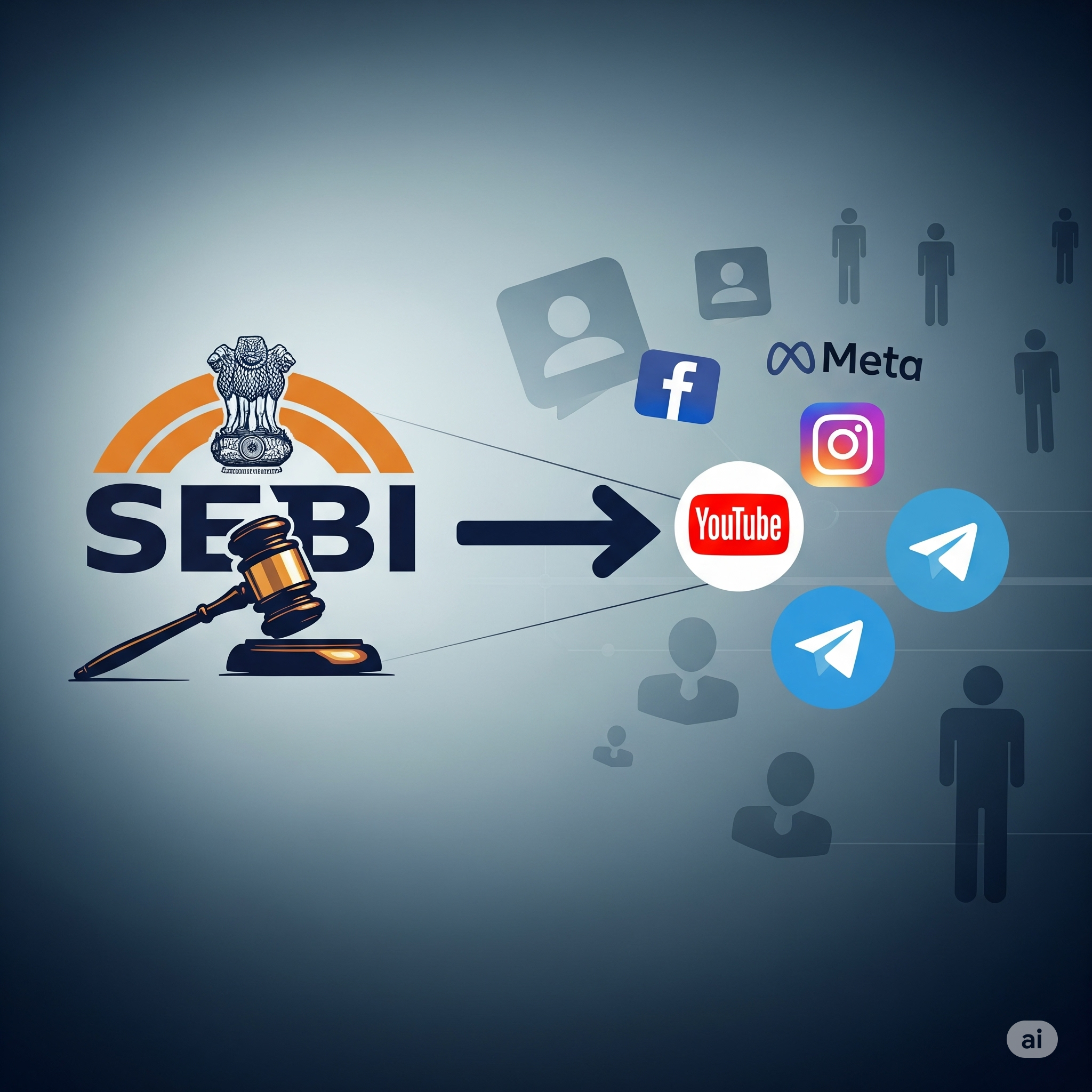
SEBI Action Against Finfluencers: Platforms Like Meta, YouTube, Telegram to Face Regulatory Push
The SEBI action against finfluencers is entering a new phase as India’s capital markets regulator prepares to directly engage social media giants such as Meta (Facebook, Instagram, WhatsApp), YouTube, and Telegram. The objective is clear—curb the rise of unregistered financial advisors who operate under the guise of “finfluencers” and mislead investors, especially retail participants.
Social Platforms Under SEBI’s Scanner
According to recent reports from Hindu Business Line, SEBI has initiated talks with leading digital platforms to restrict content posted by unregistered financial influencers. These discussions are expected to lead to the following outcomes:
- Authenticity checks for content creators
- Takedown of misleading financial content
- Compliance with SEBI’s directives as a condition for collaboration with regulated entities
Sources familiar with the development stated that most platforms have expressed willingness to comply. This move is being seen as a significant step toward cleaning up the financial content ecosystem online.
SEBI to Warn Regulated Entities Against Non-Compliant Platforms
In a proactive move, SEBI is also likely to instruct regulated intermediaries—such as brokers, mutual funds, portfolio managers, and fintech platforms—not to engage or advertise on platforms that fail to cooperate with its regulatory expectations.
A senior regulatory source told the media that SEBI could invoke its enforcement powers to restrict regulated entities from associating with media platforms that do not align with its transparency mandates.
This kind of structural pressure is likely to push platforms to install stricter content filters and verification processes.
Background: SEBI’s Earlier Crackdown on Finfluencers
This is not SEBI’s first attempt to control the influence of unregistered financial voices. Last year, the regulator issued a circular explicitly instructing regulated entities to disassociate themselves from unregistered finfluencers in all capacities, including:
- Client referrals
- Joint IT integrations
- Promotional campaigns
- Product endorsements
As a result, many unregistered influencers lost access to sponsorships, referral revenue, and product promotion deals, directly impacting the monetization of their follower base.
Meta’s New Ad Policy in Compliance with SEBI’s Concerns
The platforms themselves appear to be responding to regulatory cues. For instance, Meta recently updated its advertising policies, effective July 31, stating:
“All securities and investment-related ads must be verified before being published.”
This policy will cover platforms such as Facebook, Instagram, and WhatsApp, signalling that social media compliance is becoming mainstream in financial promotions.
The Reality: Only 2% of Finfluencers Are SEBI-Registered
The underlying concern is that only around 2% of financial influencers operating online are registered with SEBI or any regulatory body. This leaves a vast digital space vulnerable to:
- Misinformation
- Fraudulent recommendations
- Unregulated advisory schemes
A survey cited in the report revealed that:
- 8% of retail investors have been misled or scammed
- The number rises to 14% among investors above 40 years of age
These figures highlight the urgent need for stronger oversight and digital accountability.
A Necessary Evolution in Financial Communication
The SEBI action against finfluencers reflects a broader evolution in how financial education and investment advice are consumed. With millions of Indians turning to Instagram reels, YouTube shorts, and Telegram groups for market guidance, the boundary between regulated advice and digital entertainment has blurred dangerously.
By stepping up direct engagement with platforms, SEBI is:
- Protecting retail investors from unqualified financial advice
- Ensuring that regulated financial content meets disclosure and suitability norms
- Pushing for transparency across digital distribution channels
Conclusion: A Turning Point for Finfluencer Accountability
The regulatory crackdown is not about silencing voices—it’s about ensuring that only qualified, transparent, and accountable voices are heard when it comes to money matters. As the financial landscape goes digital, regulatory collaboration with technology platforms becomes critical.
The SEBI action against finfluencers marks an important shift toward a safe, credible, and investor-friendly digital finance ecosystem. While the platforms work toward compliance, retail investors too must exercise caution and rely only on registered professionals for financial advice.
Highlights: What SEBI Expects from Platforms
| Key Platform | Expected Compliance |
|---|---|
| Meta | Ad verification for all investment-related promotions |
| YouTube | Content authenticity checks, remove unregistered finfluencers |
| Telegram | Monitoring of groups offering unregulated advice |
| Regulated Entities | Not to engage with platforms defying SEBI norms |
Disclaimer:
This article titled “SEBI Action Against Finfluencers: Platforms Like Meta, YouTube, Telegram to Face Regulatory Push” has been prepared by Estabizz Fintech for informational and educational purposes only. It is based on publicly available reports and media coverage, notably from Hindu Business Line. The views reflected herein are not intended to serve as legal or financial advice.
Estabizz Fintech does not endorse any specific platform, individual, or policy measure and encourages readers to rely only on SEBI-registered financial advisors when making investment decisions. For official regulatory updates, please visit the SEBI website.
Sebi May Rope in Social Media Giants Like Google to Regulate Finfluencers: A Comprehensive Strategy
Financial Education Versus Advising: SEBI’s Regulatory Stance